Stainless Steel Sheet Production Process: A Complete Guide
Stainless steel sheet production is a precise, multi-stage process that transforms raw alloys into high-performance stainless steel sheets with excellent corrosion resistance, durability, and surface quality. This guide covers the core steps of manufacturing hot-rolled and cold-rolled stainless steel sheets, ideal for SEO and industry audiences.
The process begins with melting and refining. Raw materials like iron, chromium, nickel, and scrap steel are melted in an Electric Arc Furnace (EAF) at over 1,500°C. Molten steel is then refined via Argon-Oxygen Decarburization (AOD) to adjust alloy composition, reduce carbon content, and enhance corrosion resistance—critical for high-quality stainless steel sheets.
Next, continuous casting shapes refined steel into solid slabs, the base for stainless steel sheets. Slabs are reheated to 1,100–1,200°C for hot rolling, where they pass through rolling mills to reduce thickness into hot-rolled coils (3–12 mm). This step refines grain structure and improves mechanical properties.
For thinner, precision stainless steel sheets, cold rolling follows. Hot-rolled coils are pickled to remove oxide scale, then rolled at room temperature to achieve thicknesses as low as 0.2 mm, tight tolerances, and smooth surfaces. Intermediate annealing (1,000–1,100°C) softens the material, relieves stress, and restores ductility.
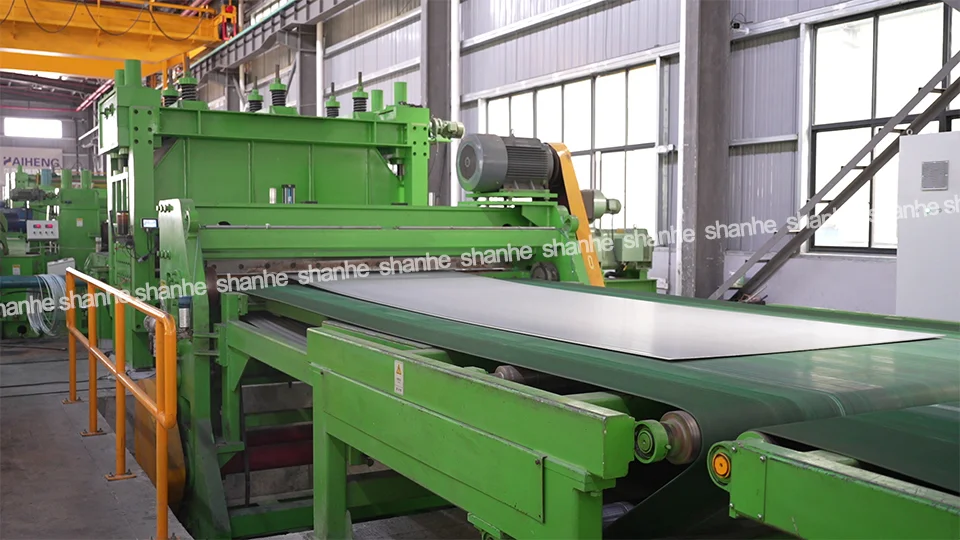
Final stages include surface treatment (polishing, brushing, or bright annealing) for desired finishes (2B, BA, No.4), cutting and leveling to standard sheet sizes, and strict quality inspection for dimensions, surface quality, and mechanical properties.
In summary, professional stainless steel sheet production ensures consistent quality, high precision, and reliable performance for applications in construction, food processing, and industrial equipment.